Can South Africans Have Dual Citizenship?
Yes.
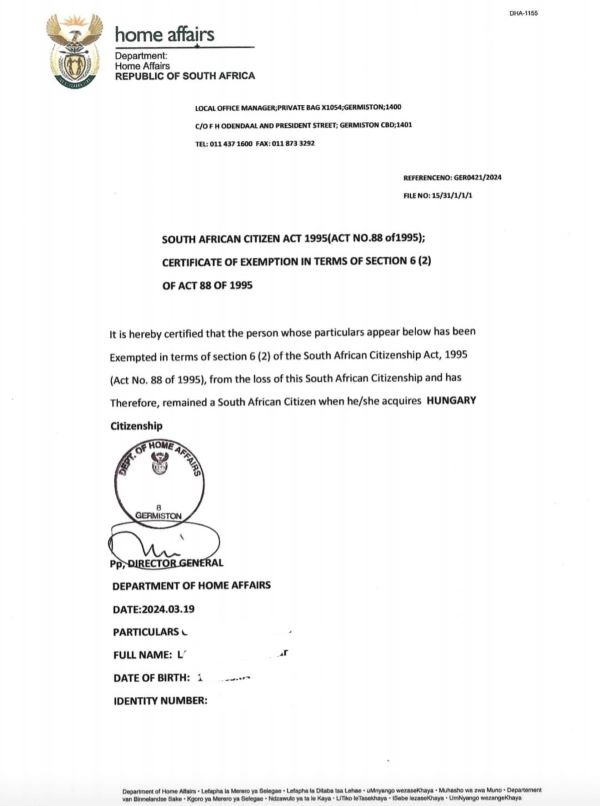
South Africa recognises dual citizenship, allowing many South Africans to hold citizenship of another country while remaining South African citizens.
However, the legal position changed significantly in 2025 following a landmark Constitutional Court judgment that declared the automatic loss of South African citizenship unconstitutional.
Understanding these changes is important for anyone considering immigration, naturalisation, or acquiring another nationality.
Important Legal Update
On 6 May 2025, the Constitutional Court confirmed that section 6(1)(a) of the South African Citizenship Act was unconstitutional.
Previously, adults who voluntarily acquired another country's citizenship without prior permission to retain South African citizenship automatically lost their South African citizenship.
The Court declared this provision invalid from its commencement in 1995 and held that affected citizens are deemed not to have lost their South African citizenship.
What Is Dual Citizenship?
Dual citizenship means a person is legally recognised as a citizen of two countries at the same time.
A dual citizen may have:
- Two passports
- Rights and responsibilities in both countries
- Different legal obligations depending on the laws of each country
Not every country allows dual citizenship, so applicants should always confirm the rules of the country where they intend to obtain another nationality.
What Changed in 2025?
The Constitutional Court found that automatically removing a person's South African citizenship simply because they voluntarily acquired another nationality was unconstitutional.
This means the previous automatic-loss rule no longer applies.
Can South Africans Still Apply for Another Citizenship?
Yes.
Many South Africans obtain another nationality through:
- Immigration
- Naturalisation
- Marriage
- Descent
- Long-term residence
Before applying, applicants should still check the requirements of both South Africa and the destination country, as each country has its own citizenship laws.
Travelling as a Dual Citizen
Holding dual citizenship does not remove your obligations under South African law when travelling.
South African citizens are generally expected to enter and leave South Africa using a valid South African passport.
Keeping South African travel documents current can help avoid unnecessary complications.
Documents Often Required During Immigration
People applying for another nationality may also require official South African documents such as:
- Police Clearance Certificate
- Unabridged Birth Certificate
- Unabridged Marriage Certificate
- Apostille Certificate
- Certificate of Authentication
- Letter of No Impediment
- Driver's Licence Confirmation Letter
Requirements differ depending on the destination country.
Immigration and Citizenship Applications
Many countries request supporting South African documents when processing:
- Permanent residence
- Citizenship
- Skilled migration
- Family sponsorship
- Marriage abroad
- Employment visas
- Student visas
Preparing these documents early can help avoid delays.
Common Questions
Many people ask:
- Can I keep my South African citizenship?
- Can I have two passports?
- Will I lose my South African citizenship?
- Which passport should I use when travelling?
- Do I still need official South African documents for immigration?
The answers depend on your circumstances and the laws of the country where you are applying.
How Authentic Documents SA Assists
Authentic Documents SA assists clients in South Africa and internationally with document preparation for immigration and overseas use.
Our services include:
- Police Clearance Certificates
- DIRCO Apostille Services
- Authentication Services
- Unabridged Birth Certificates
- Unabridged Marriage Certificates
- Letters of No Impediment
- Driver's Licence Confirmation Letters
- South African document support for international applications
We provide structured guidance and professional assistance throughout the document preparation process.
Final Thoughts
Dual citizenship remains an important topic for South Africans planning to live, work, study, or settle abroad.
The Constitutional Court's 2025 judgment changed the legal position regarding the automatic loss of citizenship, but practical immigration and travel requirements still depend on your individual circumstances and the laws of the countries involved.
Before making citizenship or immigration decisions, always confirm the latest requirements with the relevant government authorities.