The Complete 2026 Guide to Unabridged Birth Certificates for Dual Citizenship
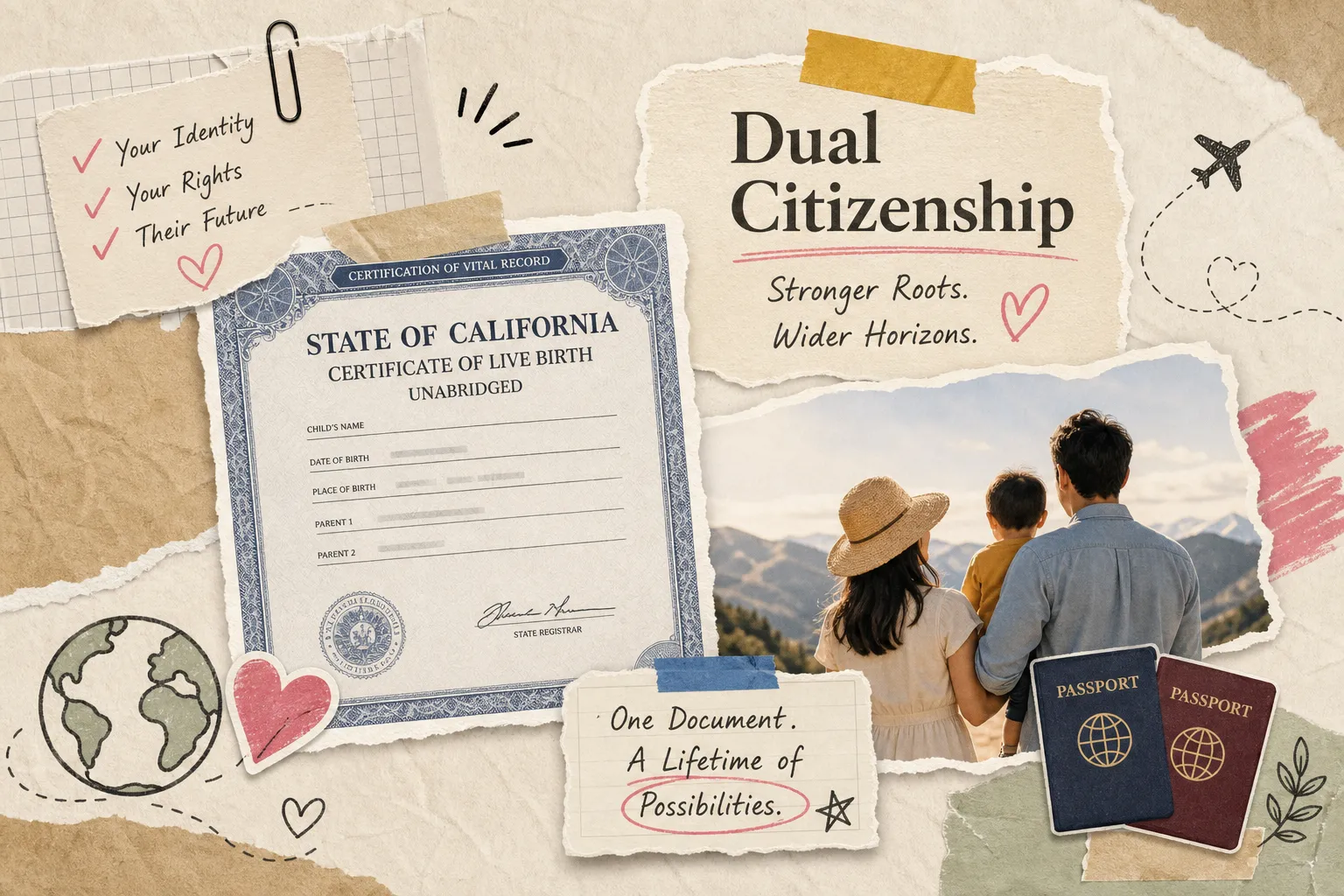
This 2026 guide covers everything you need to know about obtaining an unabridged birth certificate for dual citizenship applications in South Africa, including how to complete the DHA-154 form without errors, how to apply from the United States, what the apostille process involves, and exactly what causes applications to be rejected before they even reach a decision-maker. You've gathered your paperwork, started your dual citizenship application, and then someone asks for your "unabridged birth certificate." Most South Africans living abroad freeze at that point. You're not sure whether the birth certificate you already have qualifies, you don't know how long getting the right one will take, and flying back to South Africa to sort it out in person isn't a realistic option.
If managing this remotely feels like too much to take on alongside everything else, specialist document-assistance services such as Authentic Documents SA exist to support South Africans who cannot walk into a Home Affairs office. The sections below explain the full process so you can move forward with confidence.
What an unabridged birth certificate actually is (and why yours may not qualify)
The difference between abridged and unabridged
An abridged birth certificate is the short-form version of your birth record. It shows your name, date of birth, and place of birth, but records limited parent information, often only your mother's details. An unabridged birth certificate is the full long-form record issued by the Department of Home Affairs. It includes the complete particulars of both parents: full names, identity or passport numbers, and citizenship-related details. That fuller picture is precisely what government departments need to verify parentage and citizenship lineage when processing a dual nationality application.
Why you may not have the right document already
Many South Africans assume their original birth certificate is an unabridged one simply because it's the document they've always had. The reality is more complicated. From 2013 onward, Home Affairs began issuing unabridged certificates as the standard document at birth registration, free of charge. If you were born before 2013 and never specifically requested a UBC, you almost certainly hold an abridged certificate. That document will not satisfy a dual citizenship application, regardless of how official it looks or how long you've had it.
Why dual citizenship applications require a UBC specifically
What DIRCO and Home Affairs are verifying
A retention-of-citizenship or dual nationality application requires proof of your lineage, the citizenship status of both parents at the time of your birth, and in some cases documentation of how a foreign nationality was acquired. An abridged certificate simply does not carry enough information to satisfy these requirements. DIRCO's guidance is explicit on this point: the full unabridged birth certificate must be submitted, not a certified copy of an abridged record.
Supporting documents that must accompany your UBC
Your unabridged birth certificate is the anchor document, but it doesn't stand alone. A complete dual citizenship file requires certified copies of your valid South African passport, a certified copy of your naturalisation certificate if applicable, and your full birth certificate showing both parents' birth places if citizenship was acquired through a parent.
Where parents were born outside South Africa, you'll also need proof of their naturalisation or residency status at the time of your birth. You must provide clear documentation of how and when you acquired the foreign nationality, a foreign passport alone is not sufficient because it doesn't show the date or manner of acquisition. If a marriage certificate or divorce decree is relevant to your file and was issued outside South Africa, it must be apostilled before submission.
How to apply for your unabridged birth certificate for dual citizenship, 2026 step-by-step
Completing DHA-154 correctly
The DHA-154 is the Home Affairs form for requesting a birth certificate, including the unabridged version. Complete it in black ink using block letters, and do not use correction fluid under any circumstances. Tick the "unabridged birth certificate" box explicitly rather than leaving it open to interpretation. Enter your full name exactly as it was registered at birth, not a later assumed or married name. Include your South African ID number or birth entry number if you have it; this helps Home Affairs trace the record faster, particularly for older registrations. Write a brief statement of purpose, for example, "dual citizenship application", and sign the form at the bottom. No witness signature is required on DHA-154.
Incomplete or incorrectly completed forms are one of the primary causes of delays and rejections. Even small discrepancies between what you write and what appears in the National Population Register can prevent Home Affairs from locating your record at all. Get this right before you submit.
Your application routes
Route 1: In person at a Home Affairs office in South Africa. Submit your completed DHA-154 with your original South African ID. This is the most straightforward option if you happen to be in South Africa.
Route 2: Via the e-Home Affairs online portal. The portal does allow some birth certificate applications, but its support for older records that may require archive or vault searches is limited. If your birth record predates recent digitisation, a fully automated online process may not be available; in-person identity verification or manual tracing from Pretoria may still be required. Contact Home Affairs directly to confirm whether your record can be processed online before submitting.
Route 3: Through a South African embassy or consulate in the US. For South Africans based in the United States, this means submitting a completed DHA-154 and the DHA-529 citizenship determination form to the nearest South African mission, along with a certified copy of your passport and a US$6.00 money order payable to the South African Embassy. Missions serving the US include Washington DC, Los Angeles, and New York. Be aware that embassy processing timelines are significantly longer than in-country applications.
Route 4: Through a specialist document-assistance service. For those who cannot travel to South Africa or reach a consulate, Authentic Documents SA offers remote support for the UBC application process. The service covers DHA-154 preparation, supporting document checks before submission, and liaison with Home Affairs on your behalf, with international courier delivery of the completed certificate. Specialist pre-submission review can reduce the risk of avoidable errors, though it cannot guarantee processing times or outcomes, always request a clear written scope of work before engaging any third-party service.
Processing times and fees to plan around in 2026
Standard timelines and current fees
According to the Home Affairs official fee schedule, a standard UBC application at a Home Affairs office in South Africa costs R75 and takes approximately 6 to 8 weeks. Several factors can extend this substantially. If your birth record is older and Home Affairs must conduct a vault or archive search, processing can take 3 to 6 months or longer. If your birth was never formally registered, late birth registration must be completed first, adding both time (a further 3 to 6 months at minimum) and an additional fee of R75 for applicants under 15, or R150 for those over 15. Build these possibilities into your timeline well before your citizenship application deadline.
Embassy applications: the timeline reality
South Africans applying through a consulate or embassy in the United States face considerably longer waiting periods. Embassy applications routinely take 6 to 12 months, and the South African Embassy in Washington DC has published a minimum processing period of 6 to 8 months for birth certificate applications submitted through the mission, confirm the current figure directly with the relevant mission before submitting, as guidance is subject to change. If your record also requires an archive search, that timeline extends further. If you have a citizenship application deadline, account for this now rather than after you've already submitted everything else.
Getting your UBC apostilled or legalised for international use
Apostille vs. legalisation: which applies to you
Whether you need an apostille or full legalisation depends on the country where the UBC will be used. The United States is a member of the Hague Apostille Convention, which means DIRCO attaches an apostille directly to your original UBC and no further embassy legalisation is required. If the destination country is not a Hague Convention member, DIRCO issues a Certificate of Authentication instead, and the document must then be legalised by the relevant foreign embassy or consulate.
Submitting to DIRCO's Legalisation Section
DIRCO requires the original unabridged birth certificate issued and stamped by Home Affairs; certified copies and abridged certificates are not accepted. Submit the original to DIRCO's Legalisation Section in Pretoria along with a clear indication of the country of intended use, because that determines whether DIRCO issues an apostille or a Certificate of Authentication.
DIRCO attaches the apostille or authentication directly to the original document before returning it. Standard processing through courier submission currently takes 3 to 4 weeks per DIRCO's published guidance, though actual turnaround varies depending on backlog, in practice, timelines of 4 to 8 weeks are common. If your destination country also requires a certified translation, arrange this through a sworn translator; the translation may need separate authentication depending on that country's requirements.
Why applications get rejected and how to avoid it
The most common DHA-154 errors
Most application rejections and delays come from preventable errors that reset the entire timeline. The most frequent problems include using correction fluid or overwriting on the DHA-154 form, ticking the abridged option instead of the unabridged one, entering a name that doesn't match the original birth registration, and omitting the birth entry number when the record is old or difficult to trace. Submitting certified copies to DIRCO's Legalisation Section instead of the original certificate is another common mistake that results in immediate rejection. Each of these errors sends your application back to square one, and for applicants abroad, that means weeks or months of additional waiting.
Managing this without flying back to South Africa
The compounding challenge for expats is real. You're gathering documents from thousands of kilometres away, ensuring everything aligns with DHA and DIRCO requirements before submission, and then following up with government offices during South African business hours while living in a different time zone. This is where most applications stall, not because the process is impossible, but because one missed detail triggers a delay that stretches into months.
Authentic Documents SA offers end-to-end remote support that covers the full submission chain: DHA-154 preparation, supporting document review, Home Affairs and DIRCO liaison, and international courier delivery of your completed, apostilled UBC. The practical advantage of specialist support is a more thoroughly checked file before it reaches a government office, which reduces the likelihood of avoidable errors causing delays.
Your 2026 checklist: unabridged birth certificate for dual citizenship applications South Africa
The core steps are straightforward once you understand them. Confirm you actually need an unabridged birth certificate, not an abridged one, and that you don't already have one issued after 2013. Complete DHA-154 accurately and in full. Choose the right application route based on where you are. Build in realistic time for Home Affairs processing and the DIRCO apostille step. Check every supporting document against requirements before anything is submitted. Most rejections are entirely preventable with thorough preparation.
For South Africans in the United States managing an unabridged birth certificate for dual citizenship applications from abroad, Authentic Documents SA offers case management from DHA-154 preparation through to Home Affairs submission, DIRCO apostille, and international courier delivery, keeping you informed at each stage without requiring you to be in South Africa. To discuss your specific situation and get a clear scope of what the service covers, contact the Authentic Documents SA team directly.
Why Use a Professional Assistance Service?
Many applicants dealing with immigration, passports, and foreign citizenship matters prefer professional guidance and courier support.
Many applicants prefer expert help because it can reduce delays, confusion, and repeated follow-ups.
Authentic Documents SA assists clients locally and internationally with document applications and secure courier options.
Need Help?
If you need assistance with an Unabridged Birth Certificate in South Africa, contact Authentic Documents SA for professional support.